How does a magnetic fidget slider work?
Guides Updated
Magnets do two jobs in a fidget slider. They hold the two plates together. They also make the positions where the top plate stops. Where the magnets are, and how strong they are, decides how a slider feels.
This guide explains magnetic sliders in general. It does not show what is inside SLATE-01. Detent keeps that a secret.
Pull and push
Each magnet has two poles, north and south. Opposite poles pull toward each other. Like poles push away from each other.
The pull gets weaker quickly as the gap between two magnets gets larger. So a small change in a gap can change the feel of a slider a lot.
A magnet also pulls on iron and on most steel. It does not pull on aluminium, brass, copper, titanium or plastic with a force that you can feel.
Why do the plates stay together?
A slider has magnets in both plates, or magnets in one plate and steel in the other. The pull between them holds the top plate against the bottom plate. The top plate can slide, but it does not fall from the bottom plate.
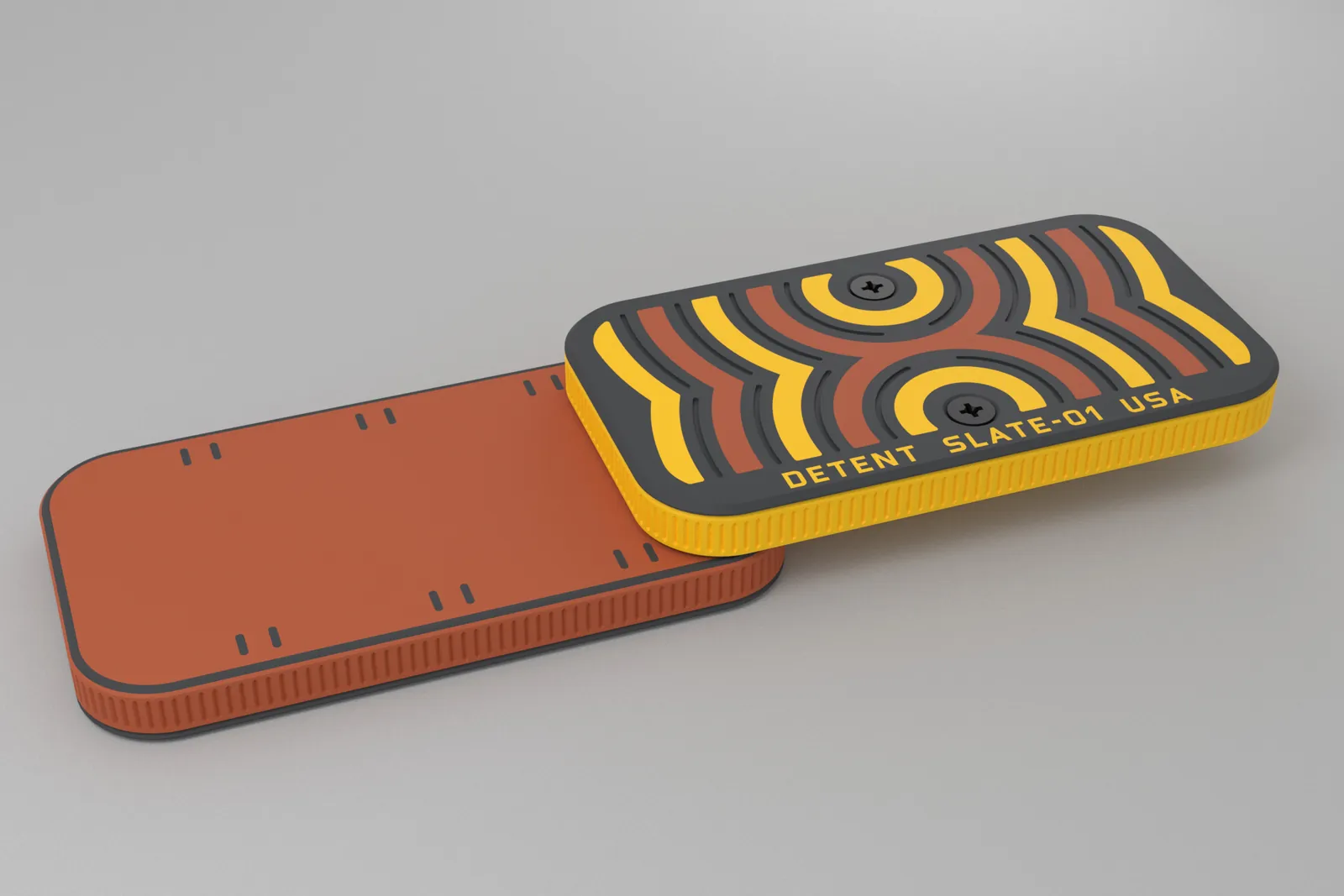
Travel is the distance that the top plate can move. On many sliders, an edge, a rail or an end stop keeps the top plate on its path. An end stop is the hard limit at the end of the travel.
What makes the click?
A click point is a position where the top plate stops and holds. Engineers call a position like this a detent.
At a click point, a magnet in the top plate aligns with a magnet or a piece of steel in the bottom plate. The pull is strongest there, so the plate stays.
When you push the plate, the magnets move out of line, and the pull resists your thumb. Past the middle point between two click points, the next click point pulls more strongly. The plate then jumps to it.
The sound comes at the end of that jump. The plate stops suddenly against the bottom plate or an end stop, and you hear and feel a click.
What makes a float?
A float is a long move with no click point between its two ends. One way to make a float is to keep the pull about the same along the path. Then no position holds the plate more than the next. The plate moves freely to an end stop.
Why does the plate return home?
Near the start position, the home click point pulls more strongly than any other. When you release the plate near home, the magnets pull it home.
Some sliders also use like poles. Their push moves the plate away from one end and toward home.
What changes the feel?
- Magnet strength. Stronger magnets give a firmer hold and a harder click.
- The gap. A smaller gap between the magnets gives a stronger pull.
- The spacing. Click points that are close together give short, quick steps.
- The number of click points. More click points give more steps along the path.
- The surfaces that touch. Metal on metal gives a sharp, loud click. Plastic, or a soft pad, gives a softer click.
- The weight of the plate. A heavier plate usually hits harder, so its click feels heavier.
Why do the magnets need care?
The magnets in a slider are strong. Never put a slider in your mouth. If a person swallows a magnet, get medical help immediately. Is a magnetic fidget slider safe? gives all the rules.
And SLATE-01?
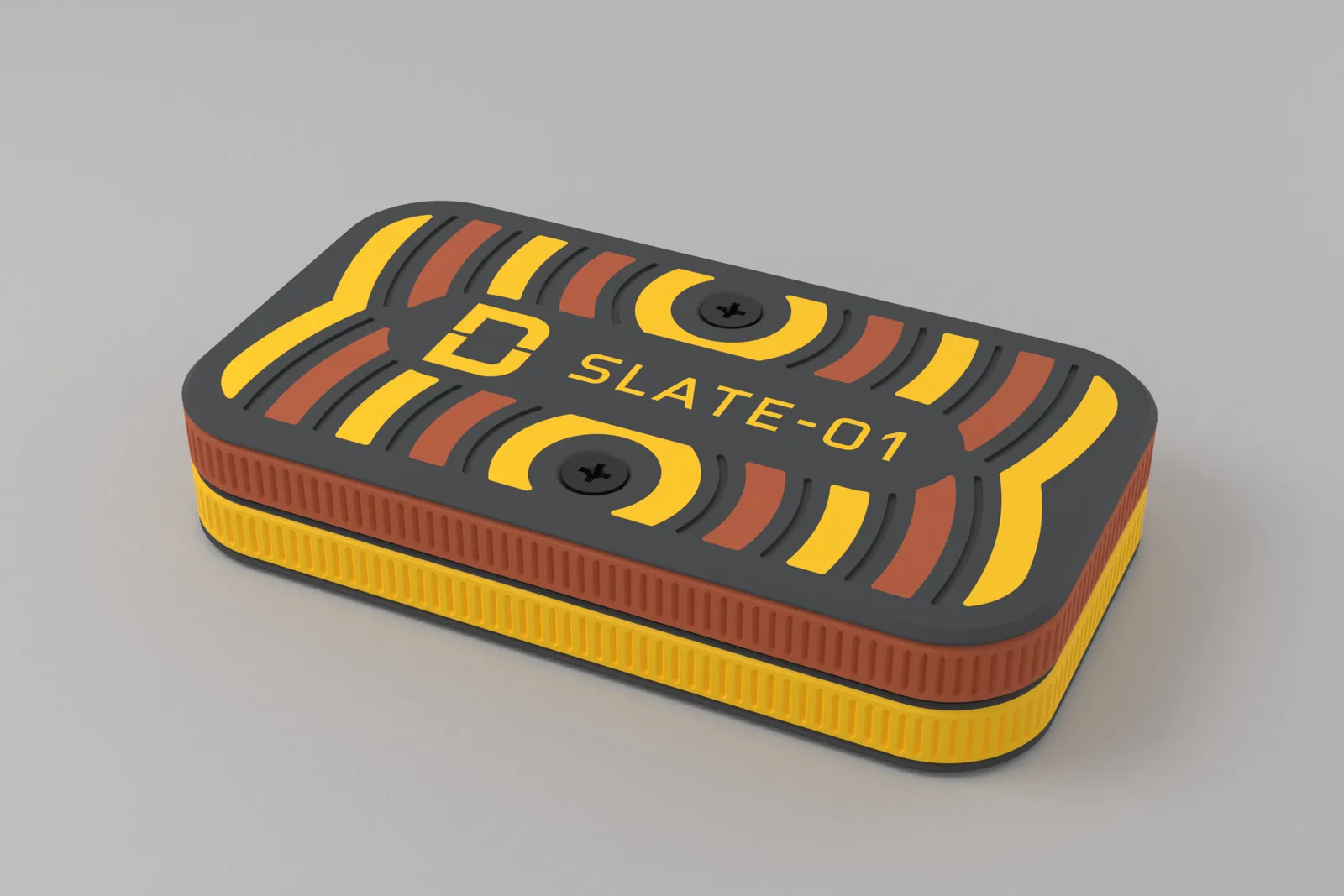
SLATE-01 floats 54 mm, clicks 18 mm to the side, wags a quarter turn on one corner and loops home. In skilled hands, it also turns all the way round one corner, once (360°) or twice (720°). Detent does not say how it does this. Hold one, and try to solve it.