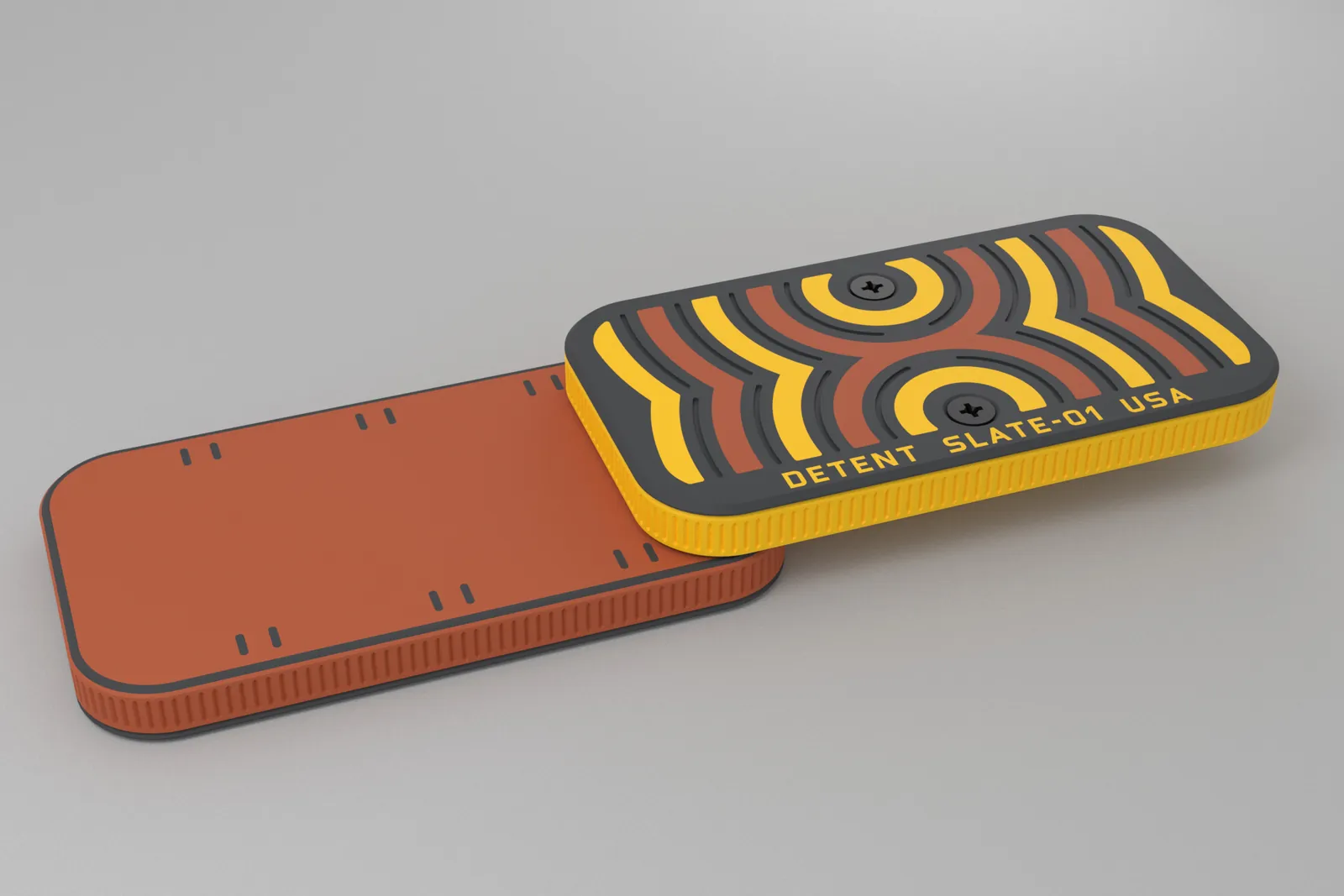
What is a magnetic fidget slider?
Guides Updated
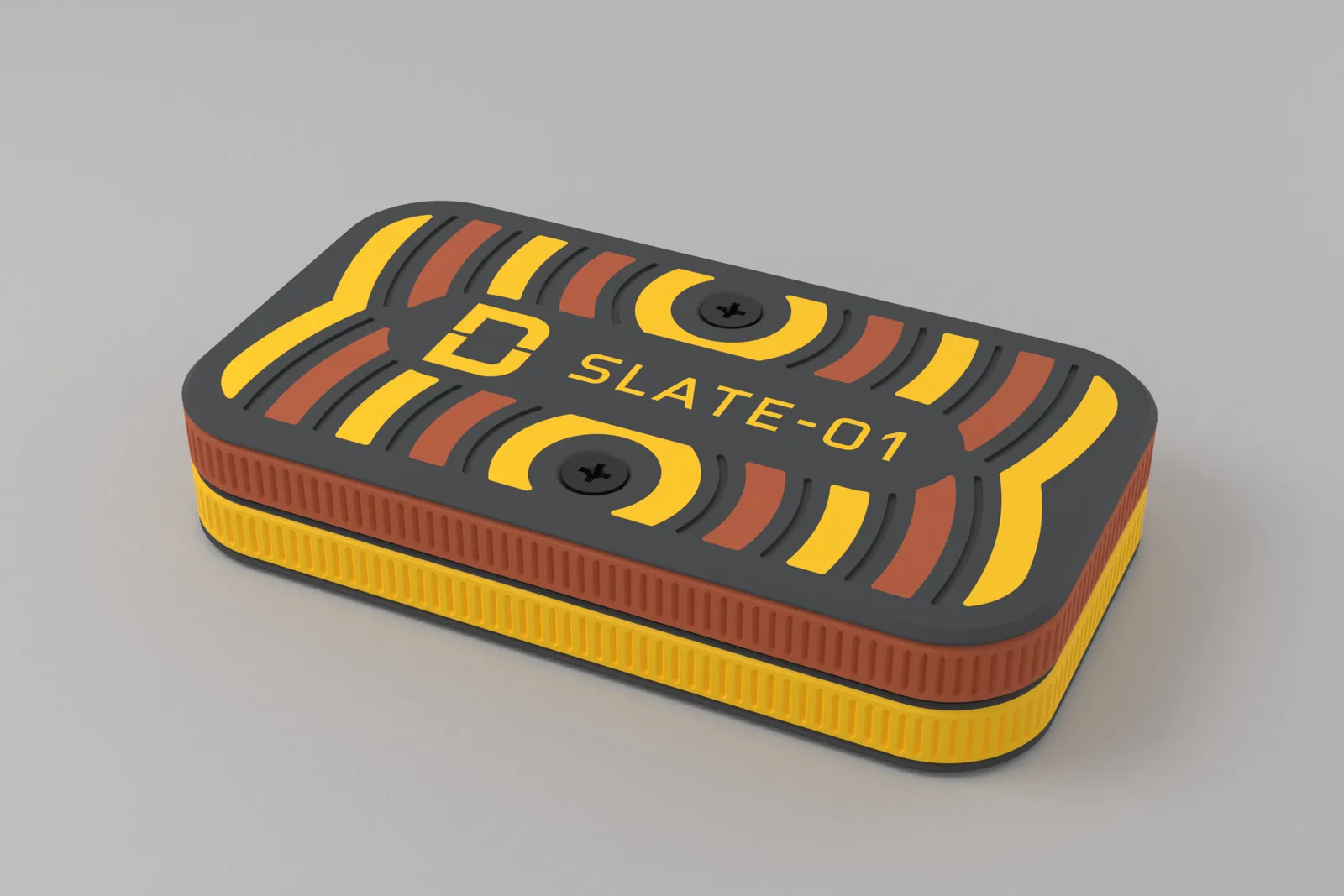
A magnetic fidget slider is a small object for one hand. Magnets hold its two plates together. You push the top plate with your thumb. It slides along the bottom plate and stops at set positions, often with a click.
People also call it a haptic slider, an EDC slider or a magnetic slider. “Haptic” means that you feel it. “EDC” means everyday carry: the small objects that a person carries each day.
What does a magnetic fidget slider do?
The top plate moves on the bottom plate, and the magnets control where it stops. Most sliders give one or more of these moves:
- Slide. The top plate moves along the bottom plate.
- Click. The plate stops at a click point. You hear the click, and your thumb feels where the plate is.
- Float. The plate moves a long distance with no click point between its two ends.
- Return. Near its start position, the magnets pull the plate home.
- Turn. On some sliders, the top plate turns on one corner, or flips.
You can use a slider in a closed hand or in a pocket. You do not have to look at it.
Why do people use one?
People use a slider to keep their hands busy. They use it at a desk, in a meeting, on a call, on a train or while they wait.
Some people with ADHD or anxiety say that a fidget helps them focus or stay calm. A fidget is not a medical treatment.
Many people collect sliders. They compare the feel, the sound, the moves and the finish of each one.
What is a slider made of?
You see two parts: the top plate and the bottom plate. Magnets hold the plates together, so the slider stays in one piece in your hand. The magnets also make the click points. How does a magnetic fidget slider work? explains this.
Makers use metal or plastic for the plates. Common metals are aluminium, titanium, brass, copper and stainless steel. A metal slider is usually heavier than a plastic slider of the same size.
Most sliders use neodymium magnets. These magnets are small, but much stronger than a fridge magnet.
Is a magnetic fidget slider safe?
The magnets in a slider are strong. Obey these rules:
- Never put a slider in your mouth.
- If a person swallows a magnet, get medical help immediately. Two magnets, or a magnet and a piece of metal, can pull toward each other through the walls of the gut and cause serious injury.
- Keep strong magnets away from pacemakers and other medical devices in the body.
- Keep a slider away from cards with a magnetic strip.
- Do not use a slider with a loose or broken magnet.
How to keep a fidget slider in good condition gives the care rules.
Slider, haptic coin or spinner?
A slider slides and clicks. A haptic coin turns and clicks. A spinner spins on a bearing. A slider and a coin are flat, so they fit in a pocket. A spinner needs space to spin. Fidget slider, haptic coin or spinner compares the three.
What is SLATE-01?
SLATE-01 is the magnetic fidget slider that Detent designs. It is 69 × 38 × 12.6 mm and weighs about 57 g. That weight is the design model’s figure for the finished slider.
Its top plate floats 54 mm, wags a quarter turn on one corner, clicks 18 mm to the side and loops home. In skilled hands, it also turns all the way round one corner, once (360°) or twice (720°). Detent makes each look once, in a limited run.